
Founded in 1909, The University of Queensland is one of Australia's leading research and teaching institutions. Starting with 83 students in 1911, UQ has grown into a comprehensive university of over 55,000 students. Located primarily in Brisbane, Australia, the university has evolved from its humble beginnings in Old Government House to become one of the world's top-ranked institutions, known for its research excellence and teaching innovation
55,424
Total enrollment
21,500
International students
141
Countries represented
-1727239604652.svg)
Group of Eight (Go8)

Universitas 21

Universities Australia
UQ provides comprehensive career development support through innovative approaches to fostering student retention and employability. The university's Career Development Framework, a national first, is designed to accelerate students' career development and enhance their employability. Students can access various development opportunities to build their capabilities and learn to articulate their potential to employers. The university's strong focus on practical experience, combined with global engagement opportunities and industry partnerships, helps maintain its graduate employment rate of 81%, above the national average of 78.5%. Through partnerships with students, UQ continuously develops new initiatives to enhance the student experience and career outcomes
81%
Graduate employment rate
78.5%
National average
200+
Student clubs and societies
These are the expert instructors who will be teaching you throughout the course. With a wealth of knowledge and real-world experience, they’re here to guide, inspire, and support you every step of the way. Get to know the people who will help you reach your learning goals and make the most of your journey.
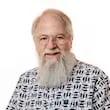
Renowned Expert in Vertebrate Biology and Comparative Anatomy at Cornell University
William E. Bemis is a Professor of Ecology and Evolutionary Biology at Cornell University, specializing in comparative vertebrate anatomy, ichthyology, marine vertebrate zoology, paleontology, and systematics. With a career spanning over 40 years, Bemis has made significant contributions to the field of vertebrate biology. He received his B.A. from Cornell, M.S. from the University of Michigan, and Ph.D. from UC Berkeley. Bemis has extensive research experience, having worked with specimens in over 50 natural history collections worldwide. His research focuses on the anatomy, development, and evolutionary relationships of fossil and living fishes. Bemis has authored numerous influential publications on topics ranging from shark tooth development to the evolution of fish anatomy. He has also co-authored major textbooks in vertebrate anatomy. At Cornell, Bemis teaches courses in vertebrate biology, anatomy, paleontology, and evolution, while also training undergraduate and graduate research students. His diverse expertise and extensive research experience make him a leading figure in the study of vertebrate evolution and comparative anatomy.
Shark Biologist and Yale Lecturer
Joshua Moyer is a Lecturer in the Department of Ecology and Evolutionary Biology at Yale University, specializing in elasmobranch biology, comparative morphology, and marine ecology. With degrees from Millersville University, Cornell University, and the University of Massachusetts Amherst, Moyer has extensive expertise in shark anatomy, feeding behavior, and evolution. His research focuses on shark dentition, feeding performance, and comparative morphology, with notable publications on shark tooth microstructure and feeding kinematics. As the Resident Research Scientist at the Atlantic Shark Institute and an active member of professional societies like ASIH and AES, Moyer contributes significantly to the field of shark biology. At Yale, he teaches courses on comparative vertebrate anatomy and shark biology, combining his research experience with education to foster a deeper understanding of these fascinating marine predators