

C Programming Fundamentals
This course is part of C Programming with Linux.
This introductory course teaches the fundamentals of C programming, one of the most powerful and widely-used programming languages. Students learn through hands-on coding exercises in a browser-based environment, receiving instant feedback on their code. The course covers basic programming concepts including variables, data types, loops, and program structure. Designed for complete beginners, it emphasizes practical application through interactive coding exercises, preparing students for more advanced programming concepts and real-world applications in embedded systems and high-performance computing.
4.8
(17 ratings)
1,83,545 already enrolled
Instructors:

English
English
Powered by

What you'll learn
Understand fundamental concepts of hardware software and algorithms
Master variable declaration and data types in C programming
Create simple C programs with formatted output and text display
Develop programs using loops for instruction repetition
Skills you'll gain
This course includes:
PreRecorded video
Graded assignments, exams
Access on Mobile, Tablet, Desktop
Limited Access access
Shareable certificate
Closed caption
Get a Completion Certificate
Share your certificate with prospective employers and your professional network on LinkedIn.
Created by

Provided by

Top companies offer this course to their employees
Top companies provide this course to enhance their employees' skills, ensuring they excel in handling complex projects and drive organizational success.





Module Description
This foundational course introduces students to C programming fundamentals. The curriculum covers essential programming concepts including hardware/software basics, variables and data types, program structure, and control flow. Students learn through hands-on practice in a browser-based coding environment, making it accessible for beginners while providing practical experience in writing and executing C programs.
Fee Structure
Individual course purchase is not available - to enroll in this course with a certificate, you need to purchase the complete Professional Certificate Course. For enrollment and detailed fee structure, visit the following: C Programming with Linux
Instructors
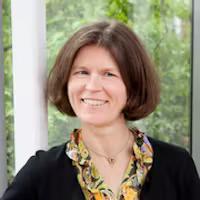
Professor of Engineering | Associate Dean for Diversity and Inclusion
Petra Bonfert-Taylor is a Professor and the Associate Dean of Diversity and Inclusion at Dartmouth College's Thayer School of Engineering. She earned her Ph.D. in Mathematics from the Technical University of Berlin in 1996 and spent three years as a postdoctoral fellow at the University of Michigan before joining Wesleyan University as a tenure-track professor. During her time at Wesleyan, she created the course "Introduction to Complex Analysis" (available on Coursera). In 2015, she transitioned to Dartmouth as a tenured full professor. Petra has an extensive record of publications and has delivered lectures to both national and international audiences. Her research has been supported by numerous grants from the National Science Foundation, and she is equally committed to teaching. She has received multiple accolades, including the Binswanger Prize for Excellence in Teaching at Wesleyan University, the Excellence in Teaching Award at Dartmouth’s Thayer School of Engineering, and the NH High Tech Council Tech Teacher of the Year Award. Petra is deeply committed to broadening access to high-quality education and developing innovative teaching methods that provide equal opportunities for students from all backgrounds.

Innovator in Autonomic Computing and Education at Telecom Paris
Rémi Sharrock is an Associate Professor at Telecom Paris, where he specializes in autonomic computing and its applications to large-scale distributed systems, including cloud computing and smart grids. With a strong emphasis on computer science education, he has developed innovative teaching methodologies, including a series of MOOCs focused on programming in C, which have garnered recognition for their effectiveness in enhancing student learning. Dr. Sharrock's research interests also encompass self-organization and self-adaptive software, contributing to advancements in how systems can autonomously manage resources and adapt to changing conditions. His commitment to integrating practical applications with theoretical knowledge makes him a significant figure in both academic and industry circles, as he continues to influence the next generation of engineers and computer scientists through his teaching and research initiatives.
Testimonials
Testimonials and success stories are a testament to the quality of this program and its impact on your career and learning journey. Be the first to help others make an informed decision by sharing your review of the course.
Frequently asked questions
Below are some of the most commonly asked questions about this course. We aim to provide clear and concise answers to help you better understand the course content, structure, and any other relevant information. If you have any additional questions or if your question is not listed here, please don't hesitate to reach out to our support team for further assistance.