Founded in 1872, Sciences Po is a prestigious research university in Paris, France, holding the status of grande école. Originally specializing in political science, it has expanded to cover various social sciences including economics, law, and sociology, with seven multicultural campuses across France
14000
total students
50%
international students
150
nationalities
grande ecole status
civica network
u7 alliance
Sciences Po provides comprehensive career development through tailored guidance, workshops, and employer networking events. The Career Services offers one-on-one advice, professional coaching, and extensive internship opportunities. Their approach includes CV writing support, LinkedIn profile optimization, and salary negotiation training
87
employment rate
35
international placement
These are the expert instructors who will be teaching you throughout the course. With a wealth of knowledge and real-world experience, they’re here to guide, inspire, and support you every step of the way. Get to know the people who will help you reach your learning goals and make the most of your journey.
Digital Cities and Urban Governance Expert
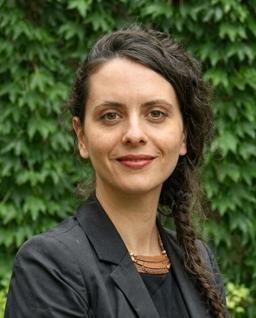
Antoine Courmont has established himself as a leading authority in digital urban governance and data policy research. As a lecturer at Université Gustave Eiffel's School of Urban Planning and researcher at LATTS since September 2023, he brings extensive expertise in urban digital transformation. His academic journey began with a PhD in Political Science (2016), where his thesis on Urban Data Policies won the 2017 PUCA-Apereau Urban Thesis Prize. Previously, he served as Scientific Director of the Digital Cities chair at Sciences Po's Urban School, where he developed pioneering research on digital technology's impact on territorial governance. His professional experience includes roles as a digital sociologist at CNIL Digital Innovation Laboratory (2019-2022) and mission officer at the Lyon Metropolis (2012-2017). His research examines how digital technologies transform urban governance, evidenced in his two influential books: "Gouverner la ville numérique" (2019) and "Quand la donnée arrive en ville" (2021). His current research focuses on the role of digital platforms in urban governance, particularly examining how Google Maps affects territorial governance and local markets. He has significantly contributed to understanding the intersection of digital technology, urban policy, and public administration through his work on big data, open data, and platform economics
Leading French Scholar in International Relations Theory
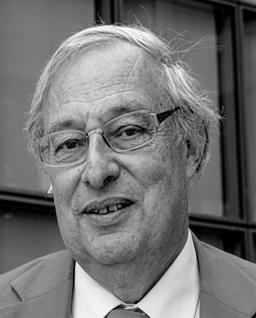
Bertrand Badie (born 1950) has established himself as one of France's most influential political scientists and international relations theorists. As an Emeritus Professor at Sciences Po Paris, he has shaped the understanding of modern international relations through his extensive academic contributions spanning over four decades. His scholarly work includes more than 20 books, with many translated into multiple languages, establishing him as a leading voice in political science. His theoretical contributions have particularly focused on the transformation of international relations in the post-Cold War era, the evolution of state sovereignty, and the impact of globalization on international systems. As former president of the International Political Science Association (IPSA) and one of the general editors of The International Encyclopedia of Political Science, he has played a crucial role in developing contemporary political science scholarship. His research has pioneered new approaches to understanding international power dynamics, particularly focusing on the changing nature of diplomacy and state relations in the modern world. At Sciences Po, he has been instrumental in developing the international relations curriculum and has mentored numerous scholars in the field. His recent works examine critical themes such as humiliation in international relations, the transformation of global order, and the evolution of diplomatic practices in the contemporary world, cementing his position as a key figure in international relations theory.